
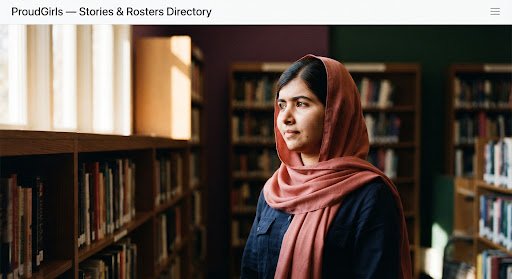
Imagine loving school so much that you refuse to give up on it—even when powerful people tell you that girls should stay home. That refusal carried Malala Yousafzai to the Nobel Peace Prize.
Her name is Malala Yousafzai.
She was born in 1997 in Mingora, in Pakistan’s Swat Valley. Her father, Ziauddin, was a teacher who ran a school. He believed his daughter deserved the same chance to learn as any boy.
For Malala, school was far more than a building. It was a place to discover the world—and imagine a future.
But the valley was changing. As the Taliban gained control, their restrictions threatened daily life. Girls were told they could no longer attend school. Schools were closed or destroyed, and families lived with fear.
Even as a child, she did not stay silent.
Malala Yousafzai Nobel Peace Prize: from Swat to Oslo
Then, in 2009, at just eleven, she began writing anonymously for BBC Urdu under the name Gul Makai. Her diary described life under Taliban rule and her longing to return to the classroom.
Soon, she was speaking publicly about every girl’s right to learn. In 2011, Pakistan recognized her courage with its National Youth Peace Prize. Her voice grew stronger—and the danger grew with it.
On October 9, 2012, as Malala was returning home from school on a bus, a Taliban gunman attacked her. She was seriously wounded.
Doctors flew her to the United Kingdom for specialist treatment. After surgeries and a long recovery, she reunited with her family in Birmingham.
The attack had tried to silence her. Instead, it made the world listen.
Nevertheless, Malala decided to continue. On her sixteenth birthday in 2013, she addressed the United Nations and called for education for every child.
Malala Yousafzai’s global platform
That same year, she and her father co-founded Malala Fund, the organisation that carries the Malala Yousafzai Nobel Peace Prize message into classrooms, working toward a world where every girl can access and complete twelve years of quality education.
Her story became part of a much larger movement: girls speaking for themselves, communities demanding opportunity, and people insisting that a child’s future should not be decided by gender.
In 2014, Malala shared the Nobel Peace Prize with children’s rights advocate Kailash Satyarthi. At seventeen she became the youngest Nobel laureate, and the Malala Yousafzai Nobel Peace Prize speech she gave in Oslo called for free schooling for every child.
She later studied philosophy, politics and economics at the University of Oxford, graduating in 2020, because the Malala Yousafzai Nobel Peace Prize was a beginning rather than an ending. In 2017, the United Nations named her a Messenger of Peace. She continued meeting girls around the world—listening to the barriers they face and helping amplify their demands.
Malala’s story is not only about surviving an attack. It is about what can happen when courage meets purpose.
One girl raised her voice. Millions more deserve the chance to raise theirs.
Her story. Her work. Her impact.
Primary reference: the Nobel Peace Prize citation. Explore the full ProudGirls roster for more dossiers.