
Skip to content

Her Story. Her Work. Her Impact. — 47 researched profiles, and growing

search person

Katalin Karikó mRNA research · Episode dossier

Doc ID: PG-MIND-042 Published October 2024
The Mind stars Tier 2: Extraordinary Achiever Biochemistry & Vaccinology military_tech Nobel Laureate 2023

Katalin Karikó: The Persistence Behind the mRNA Revolution

“You must focus on what you can control. The research does not care about grant committees; it only cares if it is true.”

Documentary Telemetry
Essay Length 8 min read
Doc Short 14:18 min
Research Verification ProudGirls Curatorial Board & Nobel Foundation Records
verified Primary-source validated dossier

Why the Katalin Karikó mRNA story opens the series

Katalin Karikó spent three decades being told her idea would not work, and the Katalin Karikó mRNA research that followed changed medicine. The episode follows that argument rather than the eventual prize, because the interesting question is how a researcher keeps a programme alive with no grant, no lab of her own and no obvious ally.

Because the dossier draws on patents, grant refusals and laboratory correspondence, the narrative can show exactly where the funding stopped and who kept the work moving. For example, the 1990s patent trail records a series of small institutional bets that larger funders had already declined.

In addition, the episode places Katalin Karikó inside the wider roster of women whose work was absorbed before it was credited. As a result, the screening series starts with a question the master story roster keeps asking: who gets to be remembered as the discoverer?

The scientific record behind this dossier is documented in the 2023 Nobel Prize citation, which credits Katalin Karikó alongside Drew Weissman for the nucleoside base modifications that made mRNA vaccines possible.

What Katalin Karikó changed

Katalin Karikó changed how a field treats its outsiders, and the episode keeps that argument in view from the first minute.
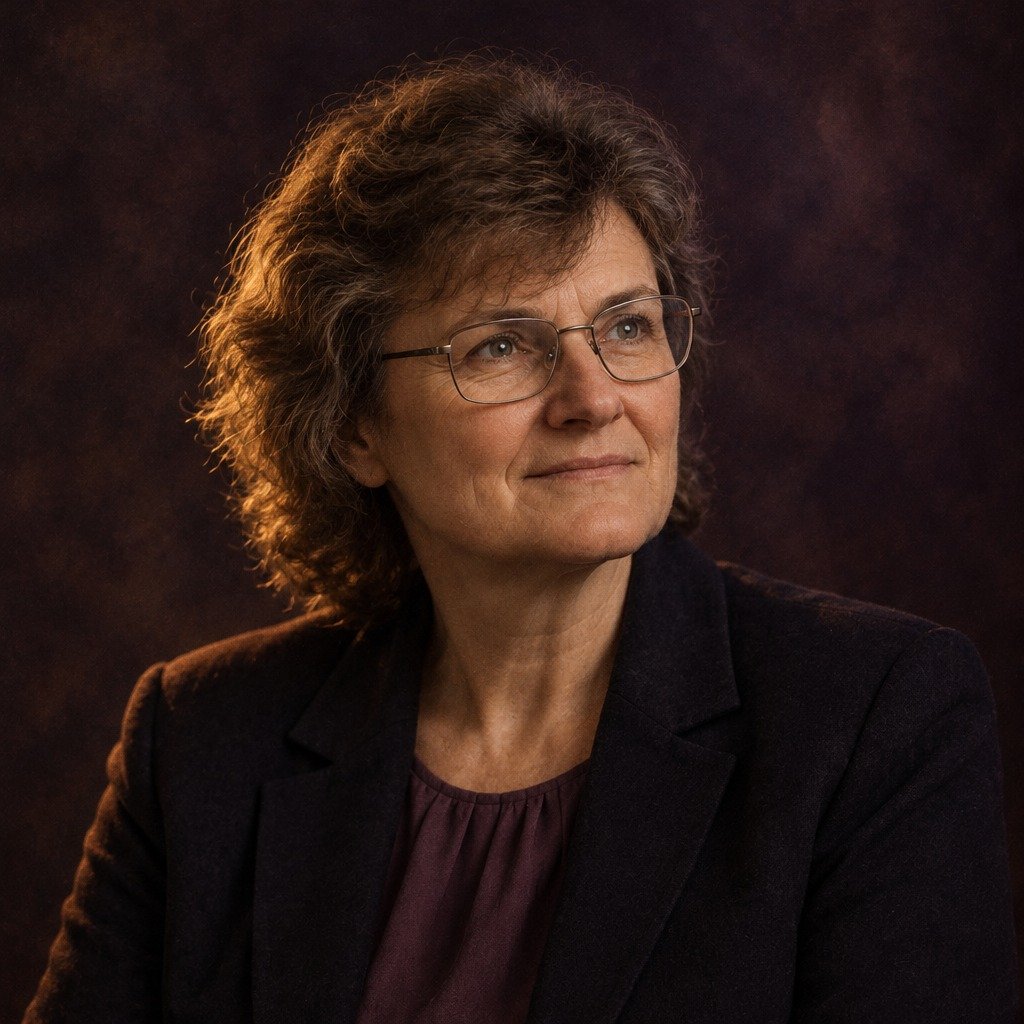
Katalin Kariko in her laboratory, subject of the ProudGirls documentary episode, part of Katalin Karikó
Katalin Kariko, the episode that opens the series.
Original Doc Short • Ep. 09 4K UHD Master
07:15 / 14:18 Current Chapter: The Breakthrough with Drew Weissman
Curatorial Abstract

In 1985, an obscure Hungarian biochemist stitched £900 of black-market cash into her daughter’s teddy bear and boarded a one-way flight to the United States. For the following thirty-four years, Katalin Karikó was ignored, repeatedly demoted, and told mRNA had no clinical future. In late 2020, her unyielding obstinacy rescued civilization from its most lethal modern pandemic.

Act I 1985 — 1997

The Stubborn Scientist Nobody Funded by Katalin Karikó mRNA Work

When Katalin Karikó arrived at Temple University in Philadelphia, she was already captivated by a fragile, ephemeral molecule called messenger ribonucleic acid. In molecular biology, mRNA is the working software of the living cell: a transient transcript dispatched by DNA to command cellular ribosomes to manufacture precise proteins. While contemporary medicine fixated on altering the permanent hard drive of DNA, Karikó envisioned sending transient instructions.

Yet in the late 1980s and 1990s, the wider scientific consensus held that mRNA was far too volatile to serve as a therapeutic. Inject it into a living mammal, and the host immune system treats it as an existential viral invader—unleashing an acute inflammatory cytokine storm that destroys the molecule before it can translate a single protein.

“Every grant I wrote was rejected. Not just one or two—dozens. In 1995, the university brought me into an office and gave me an ultimatum: leave, or accept a demotion and a massive pay cut. I had no choice. I stayed in the basement.”
— Katalin Karikó, Oral History Interview (2021)

Without sustained NIH funding, academic institutions relegate researchers to the margins. Karikó was demoted from her tenure-track trajectory at the University of Pennsylvania. Her colleagues drifted toward fashionable genomics and viral vector technologies. Working on an annual salary barely exceeding technician wages, she spent long weekends manually synthesizing fragile RNA strands under fluorescent lab lights, stubbornly refusing to abandon an idea everyone else deemed dead.

biotech Scientific Architecture
The Pseudouridine Shift
Uridine (Triggers TLR) Ψ Pseudouridine (Stealth) Single atom methylation bypasses dendritic toll-like receptors Schematic of Nucleoside Modification (Karikó-Weissman Breakthrough)

The Trojan Horse of Immunology

Human immune cells possess Toll-like receptors (TLRs) programmed to recognize unfamiliar foreign RNA and instantly launch inflammation. Karikó discovered that natural human transfer RNA (tRNA) avoids this alarm because its nucleoside uridine has been chemically converted to pseudouridine. By swapping ordinary uridine for modified pseudouridine in synthetic mRNA, the molecule slipped through defenses like a ghost—producing ten times more protein without a whisper of inflammation.

Act II 1997 — 2005

The Turning Point by the Copy Machine

Great scientific revolutions often hinge on mundane collisions. In 1997, standing in line to photocopy scientific journal reprints at UPenn’s biomedical library, Karikó struck up a casual conversation with a newly arrived immunologist named Drew Weissman. Weissman was attempting to develop an HIV vaccine using dendritic cells, but his animal models kept generating toxic systemic reactions.

“I told him, ‘I am an RNA scientist. I can make whatever you want,’” Karikó recalled. That hallway dialogue began one of the most consequential collaborations in biochemical history. For eight years, Karikó and Weissman ran parallel experiments, painstakingly testing synthetic RNA sequences against human dendritic immune cells.

Primary Discovery Milestone • August 2005

Published in Immunity: “Suppression of RNA Recognition by Toll-like Receptors: The Impact of Nucleoside Modification and the Evolutionary Origin of RNA.”

At the time of publication, the article received virtually zero mainstream citations. Venture funds declined to license the intellectual property, and major scientific journals initially rejected the paper as an incremental laboratory curiosity.

Act III 2013 — Present

The Global Impact: 48 Hours That Changed History

In 2013, having exhausted all academic support in the United States, Karikó made another bold leap. At age 58, she moved to Mainz, Germany, joining a small, unheralded oncology startup named BioNTech, founded by physician-scientists Uğur Şahin and Özlem Türeci. While the pharmaceutical establishment considered them eccentric idealists, Karikó and her colleagues refined lipid nanoparticle encapsulation—packaging synthetic mRNA into tiny fatty spheres that protect it during blood transit.

When SARS-CoV-2 genomic sequences were posted online on January 11, 2020, the platform was ready. Because mRNA vaccines require only the digital code of a pathogen rather than live, cell-cultured viral matter, BioNTech designed candidate formulations within forty-eight hours.

By November 2020, Phase III clinical trials proved that Karikó’s modified mRNA delivered over 95% efficacy against severe disease—a triumph that saved an estimated twenty million lives globally during its first year of deployment alone. In October 2023, the Nobel Assembly at Karolinska Institutet awarded Katalin Karikó and Drew Weissman the Nobel Prize in Physiology or Medicine.

Curated Visual Artifacts

The Visual World of Katalin

Declassified lab documentation, personal correspondence, and photographic records chronicling forty years of biochemical resistance.

Szeged Biological Research Centre • 1982

Early Electrophoresis Experiments

Before automated sequencers existed, Karikó hand-poured radioactive polyacrylamide gels, examining radioactive phosphorus tracers to track the integrity of synthetic molecules.

UPenn Laboratory Ledger • Dec 1998

The Protocol Ledger

Detailed lab journals documenting the exact nucleotide ratios and temperatures required to preserve mRNA stability against ubiquitous RNase degradation enzymes.

The Consummation • 2023
Stockholm Concert Hall

Decades of quiet stubbornness honored on science’s most vaulted stage.

Industrial Scale • 2021
From Basement to Billions

BioNTech manufacturing lines producing billions of rescue doses in Mainz.

The Partnership
Karikó & Weissman

The two scientists whose joint persistence rewrote immunological dogma.

forum Educational & Curatorial Framework

Discussion & Classroom Inquiry

Questions designed for seminar classrooms, research cohorts, and community discussion groups to interrogate the structural ethics of scientific progress.

01

Institutional Bias

Why do modern grant funding systems favor incremental, safe scientific proposals over high-risk, paradigm-shifting investigations like early mRNA research?

Prompt for Science Policy
02

The Cost of Grit

Karikó endured repeated pay cuts, demotions, and academic isolation. Is it ethical for institutions to rely on individual heroism to overcome systemic barriers?

Prompt for Ethics & Labor
03

Serendipity & Collaboration

How did the informal encounter at the photocopy machine demonstrate the necessity of interdisciplinary interaction between biochemistry and immunology?

Prompt for Team Science
Further Exploration in The Mind

Pioneers of Molecular Discovery

Explore All 47 Profiles arrow_forward
The Mind • Tier 2
CRISPR Gene Editing

Jennifer Doudna

Co-developing CRISPR gene-editing technology and confronting its seismic bioethical implications for the future of humanity.

10 min documentary Read Story →
The Mind • Tier 3
X-Ray Crystallography

Rosalind Franklin

The crucial Photograph 51 X-ray diffraction research that illuminated the helical architecture of the DNA double helix.

12 min documentary Read Story →
The Mind • Tier 2
Pharmacology

Tu Youyou

Extracting artemisinin from sweet wormwood via ancient texts to synthesize a global treatment that transformed malaria care.

9 min documentary Read Story →

“Her story. Her work. Her impact. Welcome to ProudGirls.”

Every week, we curate, verify, and broadcast the documentary records of women who changed how humanity understands the possible.